Common Mistakes During Garage Door Cable Replacement can cause safety risks, uneven door movement, and costly damage if handled without proper knowledge and tools.
Garage door cables play a key role in lifting and lowering the door safely. They work with torsion springs, drums, and tracks to keep the system balanced. When cables are installed incorrectly, the entire garage door system can fail. Many homeowners attempt cable replacement without understanding the risks involved. As a result, small mistakes often turn into serious repair issues.
Why Garage Door Cable Replacement Requires Care
Garage door cables operate under high tension. They carry the full weight of the door as it opens and closes. These cables connect directly to torsion springs, which store large amounts of energy. A single error during cable replacement can cause the door to fall suddenly or damage other parts.
Because of this risk, cable replacement requires correct tools, proper measurements, and system knowledge. Many issues seen by garage door technicians come from improper DIY cable repairs.
Common Garage Door Cable Replacement Mistakes Homeowners Should Avoid
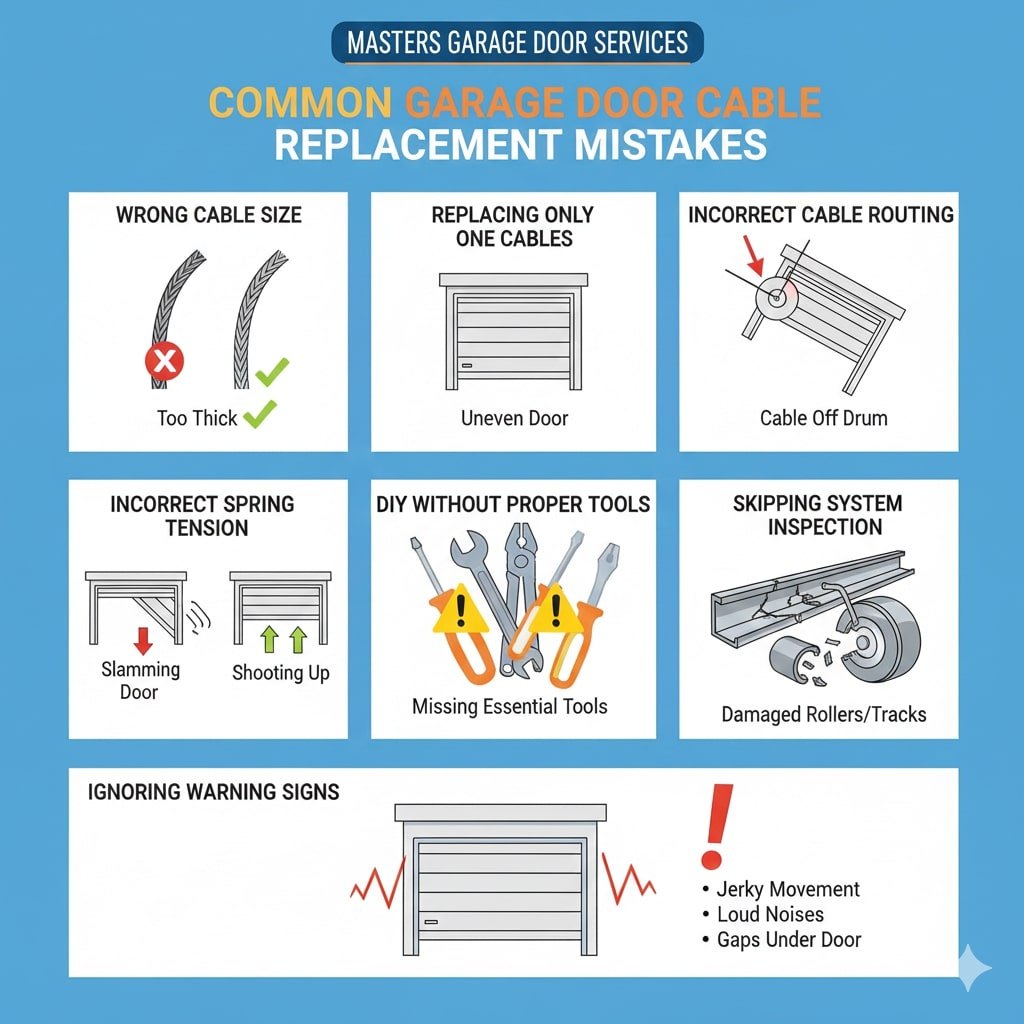
This section explains the most common garage door cable replacement mistakes homeowners make and how these errors affect safety, door balance, and long term performance.
Mistake 1: Using the Wrong Garage Door Cable Size
One of the most common garage door cable replacement mistakes is choosing the wrong cable size. Garage doors are not one size fits all. Cable length and thickness depend on door height, weight, and design.
When anyone uses the wrong cable size, the door may lift unevenly. This puts extra strain on the torsion springs and drums. Over time, this causes early wear and repeated failures. Always match the cable specifications to the manufacturer guidelines.
Mistake 2: Replacing Only One Cable
Some homeowners replace only the broken cable and leave the old one in place. This is a serious mistake. Garage door cables stretch over time. A new cable and an old cable will not share tension equally.
This imbalance causes the door to tilt to one side. You may notice the door getting stuck or moving unevenly. Professional garage door repair services always replace cables in pairs to maintain balance and safety.
Mistake 3: Incorrect Cable Routing on the Drum
Cable routing errors happen often during DIY repairs. Each cable must sit properly in the grooves of the cable drum. If the cable overlaps or slips out of place, the door may jerk, bind, or stop mid cycle.
Improper routing can also cause cables to jump off the drum completely. This leads to sudden door drops and damaged tracks. Correct alignment is essential for smooth operation and long term performance.
Mistake 4: Incorrect Spring Tension Adjustment
Spring tension errors are among the most dangerous mistakes during garage door cable replacement. Torsion springs control how heavy or light the door feels. If the tension is too high, the door may shoot up quickly. If the tension is too low, the door may slam shut.
Improper tension also increases wear on the motor, cables, and rollers. Adjusting torsion springs requires specialized tools and experience. This step should never be rushed or guessed.
Mistake 5: Attempting DIY Repairs Without Proper Tools
Many cable replacement problems come from using incorrect or missing tools. Improvised tools increase the risk of slipping, injury, and damaged components. Winding bars, locking pliers, and safety clamps are required for safe cable replacement.
Without the right equipment, even a simple adjustment can turn into a serious accident. This is why many YouTube repair attempts end with cables coming off the drum or springs losing control.
Mistake 6: Skipping Full System Inspection
Replacing cables without inspecting the rest of the system often leads to repeat failures. Worn pulleys, bent tracks, rusted drums, or damaged rollers place extra stress on new cables.
A proper garage door cable repair includes checking alignment, balance, and hardware condition. Ignoring these factors reduces cable lifespan and causes uneven door movement.
Mistake 7: Ignoring Early Warning Signs
Many homeowners ignore signs that cable replacement was done incorrectly. These signs include uneven door movement, loose cables, grinding noises, or slow operation. Some doors appear crooked when closing or opening.
These symptoms indicate tension imbalance or routing issues. Continued use can worsen damage and increase safety risks. Early correction prevents costly repairs later.
Can You Fix Garage Door Cable Replacement Mistakes Yourself
Minor adjustments may be possible for experienced homeowners. However, most cable replacement mistakes involve tension, alignment, or system balance. These issues require professional knowledge.
Garage door technicians follow safety procedures and test door balance after installation. Hiring a professional reduces injury risk and ensures proper performance.
How Professionals Avoid These Common Mistakes
Professional garage door services follow a structured process. They select the correct cable size, replace both cables, align drums properly, and set accurate spring tension. They also inspect all related components and test the system before completion.
This approach improves safety, increases durability, and ensures smooth door operation.
For a deeper understanding of cable-related issues, causes, safety risks, and repair costs, explore our comprehensive guide on garage door cable problems in Beaumont, TX, for expert insights and local solutions.
Get Professional Garage Door Cable Replacement from Masters Garage Door Services
Trust Masters Garage Door Services in Beaumont, TX, for safe and reliable garage door cable replacement. Our certified technicians work 24/7 to ensure smooth, balanced doors and prevent costly mistakes.
Conclusion
Common Mistakes During Garage Door Cable Replacement often lead to safety hazards, poor door balance, and repeated repairs. Errors such as using the wrong cable size, incorrect routing, uneven tension, or skipping system inspection can shorten the life of your garage door.
Avoiding these mistakes protects your door system and ensures smooth operation. When cable replacement involves tension adjustments or alignment issues, professional garage door cable repair is the safest and most reliable choice.
Frequently Asked Questions
What are the signs of incorrect cable replacement?
The signs of incorrect cable replacement include uneven door movement, loose or frayed cables, grinding noises, slow operation, or a crooked door. Addressing these early prevents further damage and safety hazards.
What mistakes should I avoid during garage door cable replacement?
Common mistakes include using the wrong cable size, replacing only one cable, incorrect drum routing, improper spring tension, DIY repairs without proper tools, skipping system inspection, and ignoring early warning signs.
How can professionals avoid garage door cable replacement mistakes?
Professionals follow a structured process: selecting the correct cable size, replacing both cables, aligning the drum properly, setting accurate spring tension, inspecting all components, and testing the system for smooth operation.
How often should garage door cables be inspected?
Garage door cables should be inspected at least once a year, or sooner if you notice unusual noises, uneven movement, or visible wear. Regular inspection prevents accidents and extends cable life.
What size cable should I use for my garage door?
Cable size depends on your garage door’s height, weight, and design. Using the wrong diameter or length can cause uneven lifting and stress on torsion springs. Always follow manufacturer specifications.