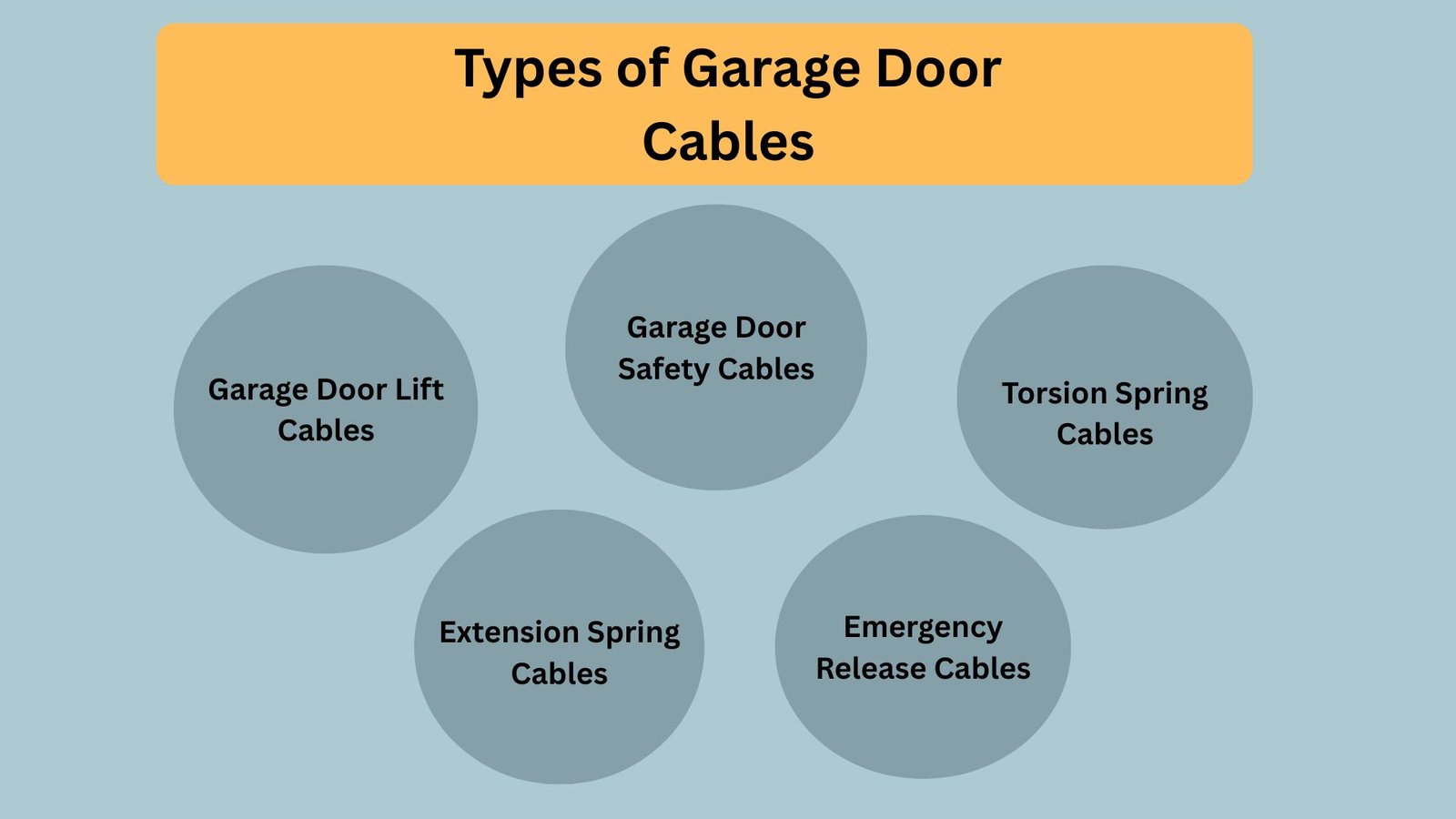
Understanding the different types of garage door cables is essential for maintaining a safe and functional home. Most Beaumont homes use either torsion lift cables (for doors with central springs) or extension lift cables (for doors with side springs). Additionally, safety cables are critical for preventing injury if a spring fails. Because these components are under high tension, professional inspection is always recommended to avoid accidents.
Which Types of Garage Door Cables Are Commonly Used in Homes?
Garage Door Lift Cables
Lift cables allow smooth door operation. They often use 7×7 aircraft cable or 7×19 strands. Heavy-duty and galvanized garage door cables resist corrosion and rust. Homeowners should check for:
- Frayed wire strands
- Slack in the line
- Popping sounds when opening
Regular inspection prevents cable failure and keeps your door operating smoothly.
Garage Door Safety Cables
Safety cables are critical for extension spring doors. They prevent springs from flying off if they snap. All safety cables should meet UL 325 standards. Coastal corrosion protection is important in Beaumont due to Southeast Texas weather conditions.
Torsion Spring Cables
These high-tension cables work with torsion springs and cable drums. Correct sizing and proper installation are vital. Using the wrong cable strength rating or poor installation can cause failure.
Extension Spring Cables
Extension spring cables guide the door along pulleys. Over time, they may weaken or rust. Regular maintenance prevents slippage or snapping.
Emergency Release Cables
Emergency release cables allow homeowners to manually operate the garage door during power failures. They should be inspected regularly for fraying or damage.
How Can You Identify the Type of Garage Door Cable in Your Home?
Start by examining the spring system and cables:
- Torsion Spring Cables are located above the garage door, attached to a central torsion spring and cable drum.
- Extension Spring Cables run along the sides, connected to pulleys and extension springs, often with safety cables.
- Garage Door Lift Cables work with torsion or extension springs to raise and lower the door evenly.
- Garage Door Safety Cables prevent spring-related accidents and are used with side-spring doors.
- Emergency Release Cables allow manual operation during power failures.
When Should You Call a Professional for Garage Door Cable Issues?
High-tension cables are dangerous. Same-day cable replacement or emergency garage door repair is safer when handled by experts. Masters Garage Door Services provides reliable service in Jefferson County, Port Arthur, Nederland, Lumberton, and Orange. Trusted brands include LiftMaster, Amarr, Wayne Dalton, Clopay, and Chamberlain.
Conclusion
Understanding the types of garage door cables helps homeowners keep their doors safe and reliable. Regular inspection, proper cable selection, and timely professional service prevent accidents and extend the life of your garage door.
Don’t Risk a Snap — Get a Professional Cable Inspection in Beaumont Today
Don’t wait for a dangerous snap to leave your car trapped or your home unsecured. Our expert technicians at Masters Garage Door Services provide fast, affordable inspections and same-day cable replacements across Beaumont and Jefferson County. Call us today at (409) 999-0899 to ensure your door operates safely and smoothly.

Frequently Asked Questions
Which Types of Garage Door Cables Are Commonly Used in Homes?
The primary types include lift cables (torsion or extension), safety cables for extension spring systems, and emergency release cables for manual operation.
Why are safety cables important?
Safety cables are critical for extension spring systems. They run through the center of the spring to prevent it from flying off and causing injury or damage if the spring snaps under tension.
How Do 7×7 and 7×19 Garage Door Cables Compare in Strength and Flexibility?
A 7×7 cable is standard for lighter doors, while a 7×19 cable is made of 133 strands, offering more flexibility and durability for heavy-duty residential use.
What Warning Signs Show That Garage Door Cables Are Wearing Out?
The most common signs are visible fraying (small wire “hairs” sticking out), the door hanging crookedly, or the cable appearing slack when the door is closed. If you hear a loud “bang” or “pop” while the door is moving, the cable may have already snapped or lost a significant number of internal strands.
Why do garage door cables rust or break?
In Beaumont and Southeast Texas, the primary cause of cable failure is oxidation and corrosion due to high humidity and salt air. Over time, moisture gets trapped between the wire strands, weakening them from the inside out until they can no longer support the weight of the door.