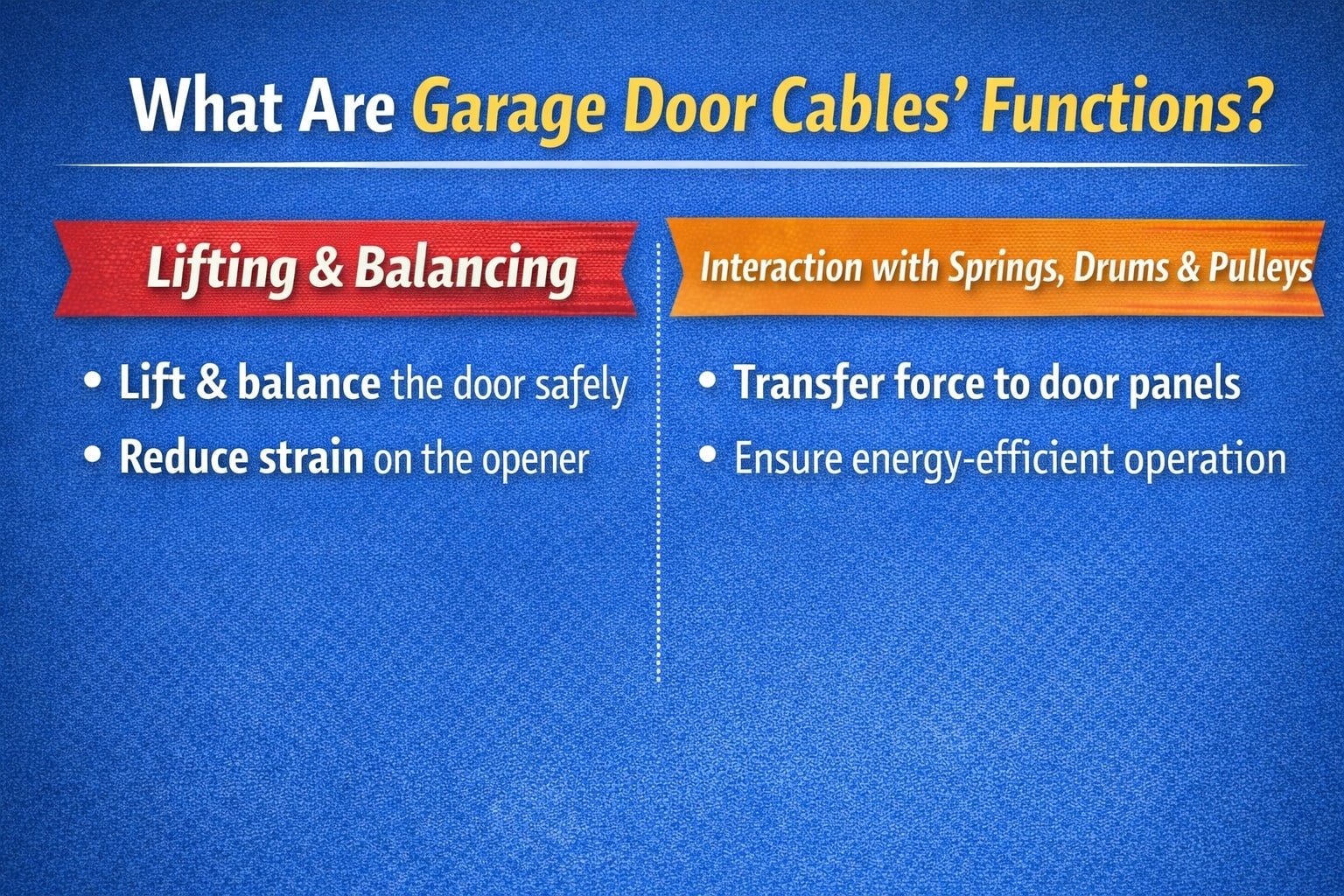
Understanding the functions of garage door cables is essential for every homeowner. These cables lift and lower your garage door safely while maintaining its balance. They work closely with springs, drums, and pulleys to ensure smooth motion. Properly functioning cables prevent uneven door movement, jerks, or dangerous situations. Both torsion and extension spring cables are critical for door performance and safety.
What Are Garage Door Cables’ Functions
Role in Lifting & Balancing
Cables carry the door’s weight during opening and closing. Lifting cables work with torsion or extension springs to reduce strain on the opener. When cables are properly tensioned, the door moves evenly and remains stable, protecting both the mechanism and your property.
Interaction with Springs, Drums, and Pulleys
Cables transfer energy from the springs to the door panels through drums and pulleys. Torsion spring cables manage heavier doors, while extension spring cables handle lighter doors. Proper alignment ensures smooth operation and prevents cables from fraying or slipping off drums.
The functions of garage door cables can vary by design. To understand the differences, explore our detailed guide on garage door cable types and how each type affects lifting, balance, and safety.
How Garage Door Cables Work
Torsion vs Extension Spring Cables
Torsion spring cables wrap around a drum and store energy to lift the door. Extension spring cables stretch along the track and help the door move upward. Both types must be installed correctly to maintain door balance and safe motion.
Door Balance and Smooth Motion
Cables stabilize the door, ensuring it opens and closes evenly. Well-maintained cables reduce strain on springs and the motor. This keeps the panels aligned and prevents jerky or sudden movements.
Safety Mechanisms – Auto-reverse & Containment
Safety cables protect people and property if a spring breaks. They also work with auto-reverse features, stopping or reversing the door when an obstruction is detected. Proper cable function is crucial for these safety systems to work effectively.
Maintenance Tips for Long-Lasting Garage Door Cables
Routine Inspection Checklist
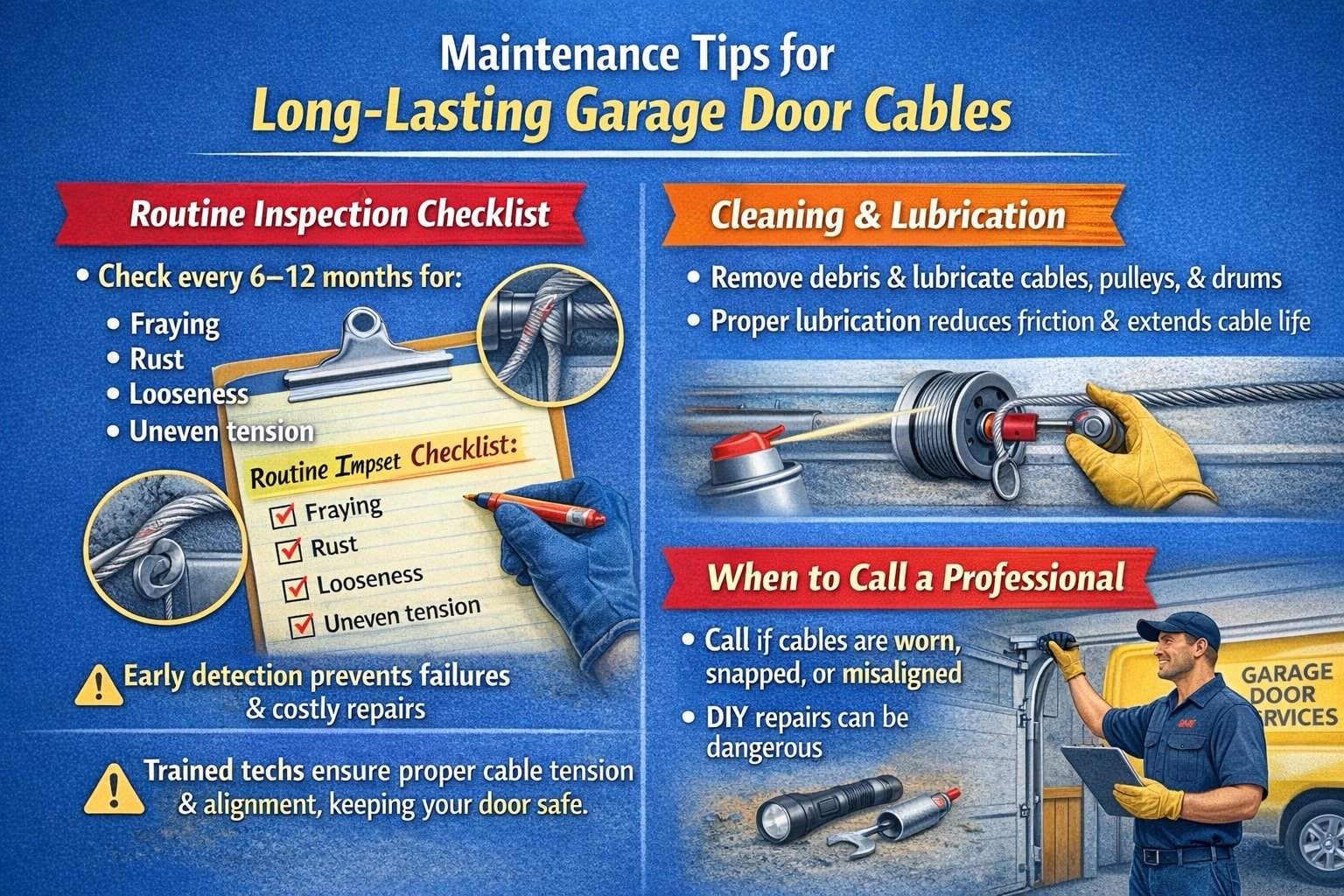
Check for fraying, rust, looseness, or uneven tension every 6–12 months. Look for cables slipping off drums or signs of wear. Early detection prevents failures and costly repairs.
Cleaning & Lubrication
Remove debris and lubricate cables, pulleys, and drums. Proper lubrication reduces friction and extends cable life without affecting performance.
When to Call a Professional
Call a professional if cables are worn, snapped, or misaligned. DIY repairs can be dangerous. Trained technicians ensure proper cable tension and alignment, keeping your door safe.
Frequently Asked Questions
What is the main function of garage door cables?
The main functions of garage door cable are lift and balance the door while ensuring smooth and safe operation.
How do lifting cables differ from safety cables?
Lifting cables carry the door’s weight, while safety cables protect against spring failures.
Conclusion & Safety Reminder
Garage door cable functions are vital for safety, balance, and smooth operation. Regular inspections, proper maintenance, and professional repairs prevent accidents and costly damages. Protect your home and family by keeping your cables in top condition. Contact Masters Garage Door Services in Beaumont, TX, for trusted, expert service today.