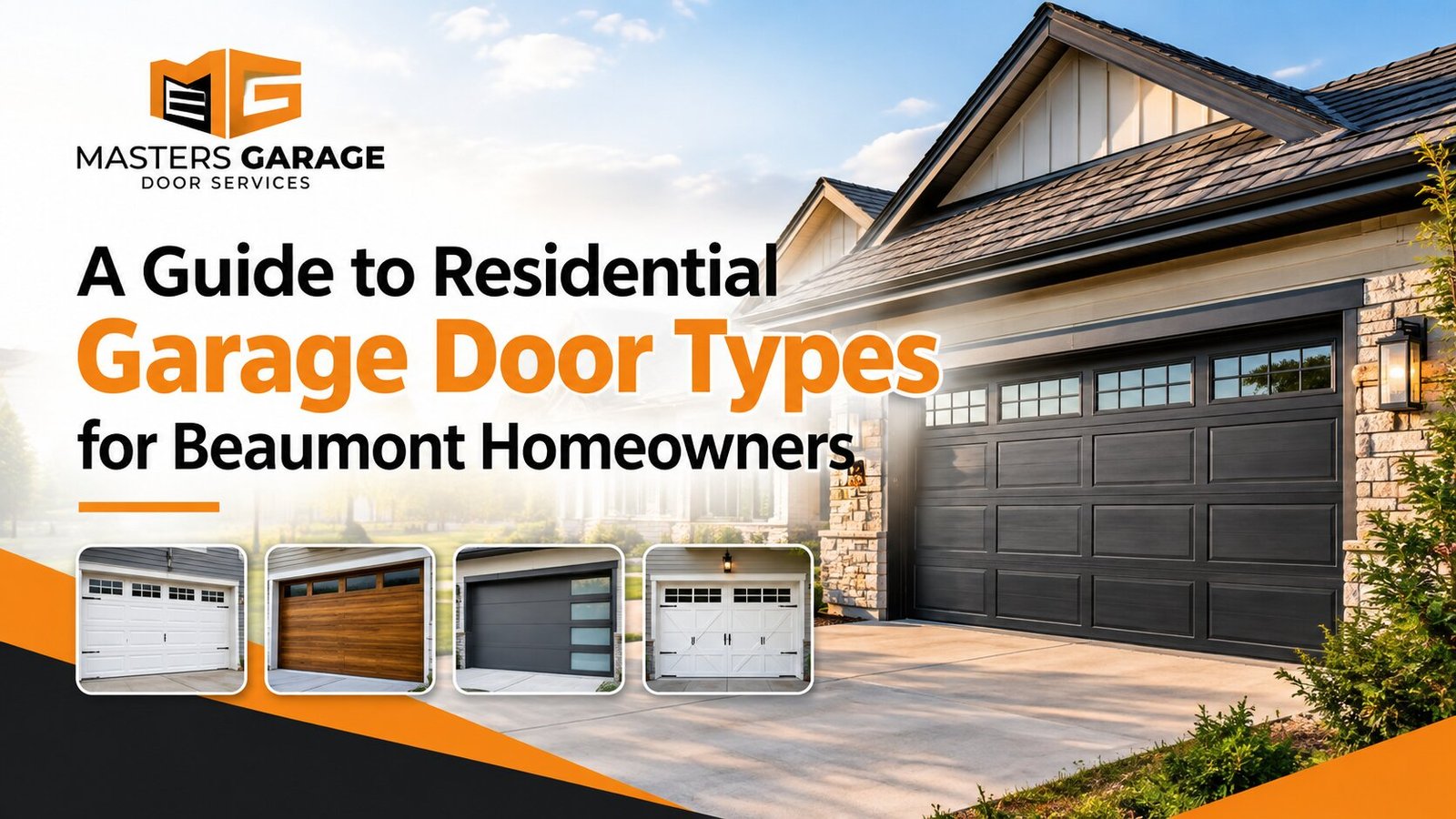
If you’ve started shopping for a new garage door, you’ve probably noticed there’s more to choose from than you expected. Style, material, insulation level, and even how the door opens all vary, and each of those choices affects how the door looks, how long it lasts, and how it holds up in Beaumont’s heat and humidity.
An old, uninsulated door with worn seals can let a lot of hot, humid air into an attached garage, which makes the space uncomfortable and adds to your cooling load. A new door isn’t just a style upgrade. It affects comfort, noise, durability, maintenance, and how well your garage holds a stable temperature. Understanding the main types before you shop makes it much easier to compare options and settle on a door that fits your house. If you’re ready to talk through specifics, Masters Garage Door Services provides residential garage door installation in Beaumont and can walk you through these choices in person.
What Are the Main Types of Residential Garage Doors?
Residential garage doors are generally categorized three ways: by style (traditional, carriage house, or modern), by construction (single, double, or triple layer), and by material (steel, aluminum, or wood). Most homeowners choose a style first, then decide on the construction and material that fit their budget and how they use the garage.
A few basics worth knowing up front:
- Style determines the look, such as raised panel, carriage house, or full view glass.
- Construction determines how well insulated the door is. More layers generally means better insulation and sound dampening.
- Material determines durability and maintenance. Steel, aluminum, and wood each have different strengths.
- Insulation rating (R value) tells you how well a specific door resists heat transfer, and higher generally means better performance, though it isn’t the only thing worth checking.
- Weatherstripping and seals matter as much as the door itself, since gaps let in heat, humidity, and pests regardless of how good the insulation is.
None of these categories cancel each other out. A carriage house style, for example, can be built in steel or wood, with single layer or triple layer construction, at a wide range of price points. The right combination depends on your budget, your garage’s exposure to sun, and whether the space is just for parking or something you spend time in.
Garage Door Styles: Traditional, Carriage House, and Modern
Most residential garage doors fall into three broad style families. Style is a separate decision from insulation and material, so you’re rarely forced to choose between the look you want and how well the door performs.
Traditional and Classic Styles
These are the most common styles in Beaumont neighborhoods and tend to suit Ranch, Craftsman, and Cape Cod style homes.
- Raised panel. Symmetrical panels with beveled edges, in either short or long sections. This is the style most people picture first when they think of a garage door.
- Flush panel. A smooth, flat surface with minimal detailing that blends into the home’s exterior rather than standing out.
- Recessed panel. Clean, straight recessed lines for a simpler look than raised panels, without losing a traditional feel.
All three can be ordered with insulated, multi layer construction, so a classic look doesn’t mean settling for weaker insulation.
Carriage House Styles
Carriage house doors are built to resemble old swing out barn or stable doors, but they operate as standard overhead doors with a normal garage door opener.
- Design details often include decorative black iron hinges and handles, with some homeowners adding a row of windows across the top for extra light.
- Best fit for Farmhouse, Craftsman, and French Country style homes, or anyone who wants a more custom, old world look without giving up modern convenience.
Carriage house doors are usually built on steel or wood composite bases, so they can be ordered with the same insulation options as traditional styles.
Modern and Contemporary Styles
Modern styles have become more popular as homeowners look for cleaner lines and more natural light.
- Full view glass. Aluminum framed doors with large glass panels, designed to bring in light and give the garage a more open, contemporary feel.
- Contemporary wood or steel plank. Horizontal plank detailing in natural wood tones or dark metal finishes, offering a minimalist look without going fully glass.
Full view glass doors trade some insulation value for light and openness, which is worth thinking through carefully if your garage is attached to the house or doubles as a workspace. Contemporary plank style doors in steel can still use standard insulated, multi layer construction. For a closer side by side comparison of these style options, our guide on garage door styles for Beaumont homes covers them in more depth.
Garage Door Construction Types: Single, Double, and Triple Layer
Beyond style, construction type determines how much insulation and durability a door offers.
- Single layer doors are one sheet of material with no insulation. They’re lighter and generally more affordable, but they offer little resistance to heat, cold, or noise, which makes them a better fit for detached garages than attached ones.
- Double layer doors add a layer of foam insulation, often polystyrene, behind the exterior skin. This noticeably improves temperature stability and cuts down on outside noise compared to a single layer door.
- Triple layer doors add an interior steel or vinyl layer as well, sandwiching insulation between two solid layers. This generally delivers the strongest combination of insulation, dent resistance, and sound dampening, though it costs more than single or double layer options.
Understanding R-Value
R value measures a door’s resistance to heat flow. A higher R value generally means the door does a better job keeping conditioned air in and outside heat out. As a rough guide:
- R-0 to R-3. Non insulated, single layer doors. Fine for a detached garage in a mild climate, but not ideal for an attached garage in Beaumont’s heat.
- R-6 to R-10. Double layer doors with polystyrene insulation. A solid middle ground option for attached garages or spaces used as a workshop or gym.
- R-12 and higher. Triple layer doors with dense polyurethane cores. These tend to offer the best combination of efficiency, durability, and noise control among residential options.
R value is a useful comparison tool, but it’s tested under controlled conditions and doesn’t capture everything about real world performance. Seals, installation quality, and how much sun your garage door faces all affect how the door performs in practice, so it’s worth weighing R value alongside those factors rather than treating it as the only number that matters.
Weatherstripping and Seals
No matter how many layers a door has, gaps around it undercut the insulation. The main seals to know:
- Top seal. Closes the gap between the door and the header.
- Side seals. Close gaps along the vertical tracks.
- Bottom seal. Seals the gap between the door and the garage floor.
- Panel to panel seals. Reduce air movement between sections on some door styles.
Cracked, flattened, or poorly fitted seals let in hot air, humidity, dust, and insects, regardless of the door’s construction. If drafts or bugs are your main complaint about an old door, it’s worth having a technician check whether new seals alone solve the problem before assuming you need full replacement.
Garage Door Materials: Steel, Aluminum, and Wood
Steel Garage Doors
Steel is the most common residential choice. It holds up well, needs relatively little upkeep beyond basic cleaning and occasional touch up paint, and is built in single, double, and triple layer configurations to fit different insulation needs. Steel also comes in a wide range of styles and finishes. The main trade off is that heavier, more insulated steel doors cost more than basic single layer versions.
Aluminum Garage Doors
Aluminum doors are lighter than steel, which can ease strain on the opener and springs over time, and they resist rust well, which matters given Beaumont’s humidity. They’re common on full view and modern door styles with large glass panels. Aluminum generally dents more easily than steel and, in most cases, offers less insulation value unless paired with a well designed insulated frame.
Wood Garage Doors
Wood offers a natural, custom appearance that suits Farmhouse and French Country style homes, and it can be stained or painted to match a home’s exact look. The trade offs are real: wood needs more regular maintenance to prevent warping and moisture damage in a humid climate, and solid wood doors are heavier and typically cost more than steel or aluminum.
There isn’t a single best material for every home. Steel tends to suit homeowners who want durability and insulation without much upkeep. Aluminum suits homeowners drawn to a modern look who want to minimize weight. Wood suits homeowners prioritizing a custom appearance who don’t mind extra maintenance.
Garage Door Operating Types: Sectional and Roll-Up
Style and material aren’t the only variables. How the door opens and travels matters too, especially depending on your garage’s layout.
- Sectional garage doors are the most common residential choice. The door is made of hinged panels that travel up and back along a track, which allows insulation to be built between the layers. This design generally offers strong insulation and sound dampening, works with standard automatic openers, and needs relatively low maintenance.
- Roll-up doors coil tightly above the opening rather than tracking overhead, which saves ceiling space. They’re a good fit for garages with limited headroom or detached structures used mainly for storage. Roll-up doors tend to offer fewer style options and, in most residential applications, less insulation value than a comparable sectional door. They’re often a better match for utility or light commercial use than for an attached residential garage.
For most Beaumont homeowners with a standard attached garage, a sectional door offers the best combination of style options, insulation, and ease of use. Roll-up doors are worth considering mainly if ceiling space is limited or the garage serves a more utilitarian purpose.
How to Choose the Right Garage Door Type for Your Beaumont Home
A few honest questions will narrow your options faster than browsing catalogs.
- How much direct sun does the garage receive? A west facing garage that bakes in the afternoon sun benefits more from higher insulation than a shaded one.
- Is the garage attached to the home? Attached garages affect indoor comfort more directly than detached ones.
- Is there a bedroom or living space above the garage? Heat and noise transfer matter more when someone spends time directly above it.
- Do you use the garage as a workspace? A garage used as a shop or hobby space benefits from better insulation and sealing.
- How important is insulation to you? Some homeowners prioritize it heavily. Others care more about appearance or budget.
- What is your budget? Insulated, multi layer doors cost more upfront than basic single layer doors.
- How much maintenance are you willing to handle? Wood requires more attention than steel or aluminum.
- What architectural style does your home have? Matching the door to your home’s design affects curb appeal and resale value.
- Do you need windows? Windows add light and style but can be a weak point for insulation if not chosen carefully.
- Are you replacing an existing door or starting a new installation? Replacements sometimes require track, hardware, or opener adjustments that a new install doesn’t.
Walking through these questions before you shop makes it much easier to compare doors on the features that actually matter for your house.
Garage Door Installation Cost Factors in Beaumont
There’s no single universal price for a new garage door, because cost depends on the specifics of your project. Factors that typically affect the final price include:
- Door size and number of panels
- Material (steel, aluminum, or wood)
- Construction type and insulation level
- Windows or decorative glass
- Decorative hardware and custom finishes
- Removal and disposal of your existing door
- Condition of tracks and hardware
- Opener compatibility with the new door
- Labor and installation time
- Any structural repairs needed before installation
Because so many variables are involved, the most reliable way to know what your project will cost is a project specific estimate rather than a generic number. Our page on residential garage door installation cost in Beaumont breaks these factors down in more depth.
Common Garage Door Buying Mistakes Beaumont Homeowners Should Avoid
- Choosing based only on appearance. A door that looks great but isn’t suited to your garage’s exposure can leave you disappointed by summer.
- Ignoring insulation altogether. Skipping insulation to save money upfront sometimes costs more in comfort over time.
- Comparing doors only by price. Two doors at the same price point can differ significantly in construction quality and insulation.
- Overlooking weather seals. A great door with poor seals still lets in heat, humidity, and pests.
- Choosing the wrong door size or operating type. A roll-up door in a garage that needs full sectional insulation, for example, may not be the right fit.
- Failing to plan for maintenance. Wood, in particular, needs more attention in a humid climate.
- Not checking opener compatibility. A heavier insulated door may need a different opener than your current one.
- Hiring based on price alone without checking installation experience. Installation quality affects how well any door performs, which the next section covers in more detail.
Installation Quality Matters as Much as the Door Type
Even a well built, properly insulated door can underperform if it’s installed incorrectly. Installation quality affects panel alignment, track installation, door balance, weather seal placement, hardware security, spring and hardware setup, door to floor contact, and safe opener integration. A proper installation also includes final testing to confirm the door operates safely and smoothly.
This is one reason installation quality deserves as much attention as the door type itself when you’re comparing options. Our team handles professional garage door installation with these details in mind from start to finish.
Garage Door Maintenance for Beaumont’s Climate
Humidity and heat make regular upkeep more important here than in drier climates. A basic maintenance routine includes:
- Inspecting weatherstripping for cracks, gaps, or flattening
- Checking the bottom seal for wear or damage
- Cleaning door surfaces to remove dirt, pollen, and grime
- Inspecting hardware, hinges, and rollers
- Watching for rust or corrosion, especially on steel components
- Paying attention to unusual noises during operation
- Monitoring for uneven or jerky movement
- Keeping tracks clear of debris
- Scheduling a professional inspection periodically
One important safety note: garage door springs are under significant tension, and adjusting or replacing them yourself carries real injury risk. That work should be handled by a qualified technician. For a broader look at what regular upkeep should include, our complete guide to garage door services in Beaumont covers maintenance, repairs, and related services in more detail.
Residential vs. Commercial Garage Doors
Residential and commercial garage doors are built for different demands. Residential doors are generally sized for single or double car garages, built with lighter duty hardware, and designed around home aesthetics and insulation for comfort. Commercial doors are typically built for higher cycle counts, larger openings, heavier duty hardware, and industrial or business operating requirements rather than home appearance.
If you’re deciding between the two for a mixed use property, or just want to understand why commercial grade doors aren’t usually the right fit for a house, our article on residential vs. commercial garage doors explains the differences in more depth. For most homeowners in Beaumont, a residential door built around style, insulation, and normal daily use is the right category to shop within.
Frequently Asked Questions
What are the different types of residential garage doors?
Residential garage doors are generally grouped by style (traditional, carriage house, or modern), construction (single, double, or triple layer), and material (steel, aluminum, or wood). Most homeowners pick a style first, then choose the construction and material that fit their budget and garage use.
What is the most energy-efficient garage door for a Beaumont home?
Insulated, multi layer steel doors with quality weatherstripping generally offer the strongest thermal performance. The right choice still depends on your garage’s sun exposure, budget, and how you use the space.
Is an insulated garage door worth it in Beaumont, Texas?
For most homeowners, yes, especially if the garage is attached to the house or used as a workspace. Insulation helps buffer heat and humidity, though the value depends on your specific garage setup.
What R-value should I look for in a residential garage door?
There’s no single R value that’s right for every home. Higher R values generally mean more resistance to heat flow, but it’s worth weighing R value alongside construction quality and seals rather than choosing on that number alone.
Are steel garage doors good for Beaumont’s climate?
Steel doors generally handle heat, humidity, and daily use well, and they’re compatible with insulated, multi layer construction. Like any material, they still need basic maintenance to prevent rust or corrosion over time.
What’s the difference between sectional and roll-up garage doors?
Sectional doors use hinged panels that track up and back overhead, which allows for strong insulation and is the most common residential choice. Roll-up doors coil tightly above the opening to save ceiling space, but they typically offer fewer style options and less insulation for most residential uses.
How much does a new garage door cost in Beaumont?
Cost depends on size, material, construction type, windows, and other features specific to your project. Because of that variation, a direct quote is the most accurate way to get pricing for your situation.
Ready to Move Forward?
Choosing a garage door type involves balancing style, material, insulation, and budget against how you actually use your garage. If you’d like help thinking through those trade offs for your specific home, our team is familiar with what tends to work well in Beaumont’s climate and can walk you through the options in person. Contact Masters Garage Door Services to request a garage door quote and discuss your project.